How to Build a Real Financial Plan for Your Business Using Claude
 Andrew Lang
How to Build a Real Financial Plan for Your Business Using Claude
A financial plan isn’t just a formality for banks or investors. It’s the roadmap that tells you whether your business idea actually works, how much cash you’ll need, and where things can break if assumptions are wrong. When used correctly, Claude can help you think through this logic faster and more thoroughly than starting with a blank spreadsheet.
The key is understanding what Claude is good at and where its output needs to be structured into a real financial model. This guide walks through how to use Claude as a planning and logic tool, not a shortcut that replaces real financial work.
What a Strong Business Financial Plan Actually Includes
Before you even open Claude, it’s important to know what you’re trying to build. A complete financial plan isn’t just a revenue forecast. It connects assumptions across the entire business so that everything ties together logically.
- Revenue drivers that explain how sales are generated (pricing, volume, capacity, growth rates)
- Cost structure broken into fixed costs, variable costs, and cost of goods sold
- Cash flow timing, not just profitability, including when customers pay and bills are due
- Startup costs, capital expenditures, and asset replacement over time
- Financing assumptions such as loans, interest, equity contributions, and owner pay
Claude becomes powerful once you clearly define these building blocks and ask it to help you reason through each one individually.
Using Claude to Build Your Revenue Logic
Revenue is where most business plans fall apart. Claude can help you think in drivers instead of guesses. Rather than asking for a single revenue number, you should prompt Claude to break revenue into measurable components.
For example, a strong prompt might ask Claude to outline revenue based on customer count, average transaction size, capacity limits, seasonality, and realistic growth over time. This forces you to sanity-check whether your assumptions actually fit the real world.
Claude is especially useful for identifying missing drivers. If your revenue jumps year over year, Claude can explain what operational change makes that growth possible, such as additional staff, higher pricing, longer hours, or new locations.
Estimating Expenses and Avoiding Common Blind Spots
Expenses are often underestimated, especially by first-time founders. Claude can help you build a more realistic cost structure by prompting it to think in categories instead of line items.
- Fixed operating costs such as rent, software, insurance, and admin labor
- Variable costs tied directly to revenue volume
- Payroll assumptions, including hiring timing and wage growth
- Owner compensation and benefits, which are often forgotten
A good use of Claude here is asking it to review your expense assumptions and identify costs that are commonly missed in your industry. This reduces the risk of being surprised once the business is operating.
Projecting Cash Flow and Funding Needs
Profit doesn’t mean much if you run out of cash. Claude can help you think through cash flow timing, especially when revenue is growing but expenses hit earlier.
You can use Claude to map out when customers pay, how inventory or operating expenses are funded, and how loan payments affect monthly liquidity. This is critical for SBA loans, investors, and internal decision-making.
Turning Claude’s Logic Into a Professional Financial Model
Claude is excellent at explaining logic and assumptions, but it does not replace a structured financial model. Banks and investors expect clean statements, consistent formulas, and the ability to test different scenarios.
The most efficient workflow is to use Claude to refine assumptions, then plug those assumptions into a pre-built financial model that already handles income statements, cash flow, and balance sheet logic correctly.
Our Pre-Built Templates
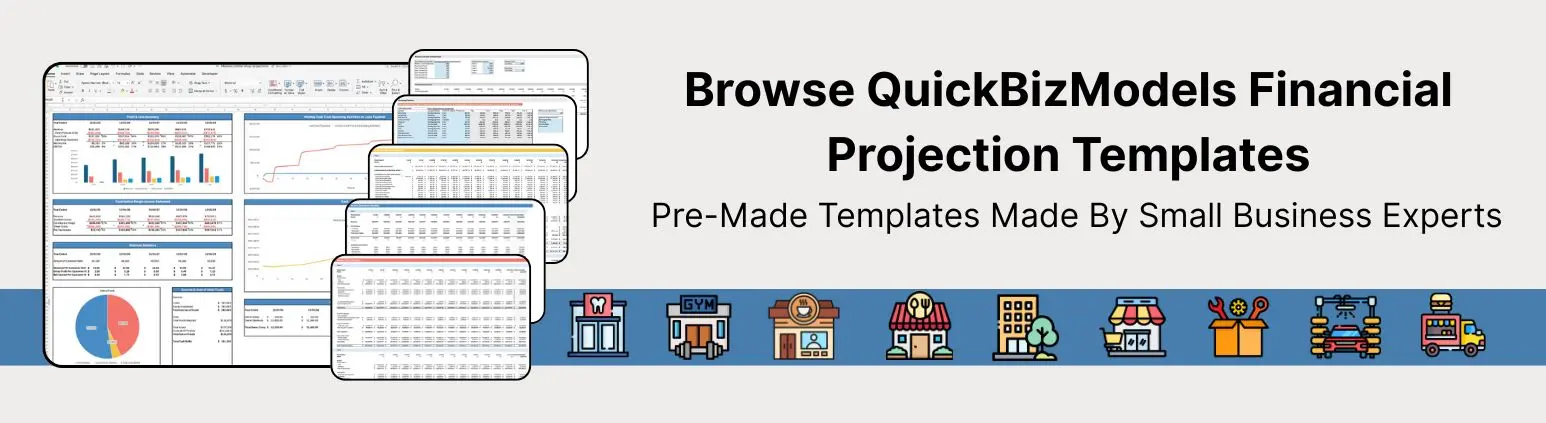
Once you’ve worked through your assumptions with Claude, the next step is turning that logic into numbers that actually hold up. Our financial plan templates are built to do exactly that. They give you a structured, lender-ready model where you can plug in your revenue drivers, expenses, loans, and equity assumptions and immediately see how everything flows through income statements and cash flow. Instead of wrestling with formulas or starting from scratch, you get a proven framework that helps you test scenarios, catch mistakes early, and present your business with confidence.
Ready to Create Your Financial Model?
Get professional, investor-ready financial projections with our industry-specific templates. Save time and secure funding faster.
Browse Financial Models →